
Get in touch with us
We at accompio will be happy to help you.


11.11.2026
When companies outsource additional IT services, locations, or user groups to external service providers, not only does the scope of services grow. Interfaces, dependencies, and requirements for management also increase. For IT outsourcing to work on a larger scale, services must be standardized and responsibilities clearly defined.
What does „Outsourcing at Scale“ actually mean? What services are suitable for this – and what should a company not compromise on despite outsourcing operations? We discuss this with Ralf Zimmermann, Servicemanager at Netz16 (part of the accompio group). He has been managing contract customers and supporting outsourcing projects for 16 years.
Explains in the expert interview Ralf Zimmermann, How companies can scale IT services across multiple areas or locations in a scalable manner – and why they need a clear strategy and strong governance to do so.
In classic IT outsourcing, a task or a single service is transferred to an external service provider. Outsourcing on a Scale It goes further: Standardized IT services are organized in such a way that they can be provided for multiple business areas, locations, or countries and expanded as needed.
It is not only the size of the outsourced operation that is crucial. A model is truly scalable only when effort and costs do not grow in proportion to the number of users or services being managed. Ralf Zimmermann illustrates this with an example: Someone who manages 1,000 users with two employees should not necessarily need 20 employees for 10,000 users. Standardization, automation, and effective control are intended to help manage growth in a different way.
Costs remain an important factor in deciding to outsource IT. According to Ralf Zimmermann, however, they are rarely the sole reason. With a more diverse IT landscape, the need for different specialized skills increases. Especially smaller companies cannot hire their own employees for every specialized field; at the same time, the shortage of skilled workers makes it difficult to fill open positions.
An external service provider can also bring new perspectives. Those who have been managing their own IT for years sometimes no longer see established processes critically enough. The outside perspective can help to identify new technologies and opportunities for improvement.
Therefore, whether outsourcing is worthwhile depends not only on a cost comparison. Companies should also ask what expertise they need, how flexible a service must be able to grow, and what contribution the service provider can make to the further development.
Services that are largely standardized and can be provided to different customers or locations following similar processes are particularly suitable. Ralf Zimmermann cites, for example:
Such services can be comparatively easily integrated into a uniform operating model. In business-critical applications and processes, however, a more detailed examination is required. Here, companies should consider how immediately an outage or a change in the service would affect their business operations – and what decisions and knowledge must remain internal.
A common misunderstanding is that when a service provider takes over the operation, all responsibility also passes to them. Ralf Zimmermann makes it clear that while the task is transferred, the fundamental responsibility for strategy and governance remains with the client.
„Although the task is transferred to the service provider, the responsibility remains basically with the client.“
Ralf Zimmermann, Service Manager at Netz16 (part of the accompio group)
For this, a special Service Owner on the customer side. He remains the contact person for the outsourced service and ensures that its performance meets the company's goals and requirements.
If several service providers are involved, the interfaces between them must also be clarified. A RACI matrix can determine who is responsible for which task, who makes decisions, who needs to be involved, and who needs to be informed. The more clearly these questions are answered in advance, the easier it is to control the service later on.
The more services an organization outsources, the greater its dependence on a single service provider can become. At the same time, internal knowledge risks being lost if employees no longer operate the relevant systems themselves.
This becomes a problem especially when a service is later to be handed over to another provider or brought back into the company. Without documentation and knowledge of the previous processes, such a transition becomes more complex.
Companies should therefore think about how to obtain knowledge, document services, and enable subsequent transfers when outsourcing. Scalability does not only mean being able to add new services; an operating model must also remain manageable even as requirements or service providers change.
Service Level Agreements (SLAs) They form an important basis. For example, they determine the timeframe within which a disruption must be responded to and a solution developed. Regular reports and service reviews show whether the agreed-upon performance is actually being delivered and whether it continues to meet the company’s needs.
Ralf Zimmermann recommends looking beyond individual SLA values. Among other things, the following are relevant for evaluating an outsourcing model:
A service can meet its contractual metrics and still not provide the desired benefits. Therefore, measurable performance and regular exchange with the service provider are essential.
When additional locations or services are included in an outsourcing model, existing processes should not be taken over without proper analysis. Ralf Zimmermann advises to analyze before any expansion: What can be unified, simplified, or standardized?
Otherwise, the operational complexity also grows with each new component. Standardized processes and automation are therefore essential prerequisites for scalable IT outsourcing. However, standards must not be unchanged if they eventually hinder service delivery. They should be regularly reviewed and, if necessary, further developed – continuing to be uniform for all relevant areas.
In the future, artificial intelligence can also support more routine tasks, such as in the service desk, monitoring, or analysis. For Ralf Zimmermann, this shifts the focus of collaboration: Instead of primarily talking about personnel resources, the focus is increasingly placed on the achieved results and the quality of the service.

accompio supports companies in the provision and management of managed IT services ranging from IT operations to workplace and cloud infrastructure services.
Outsourcing at Scale does not work by having a company outsource more and more tasks. What is crucial is how the services are organized and managed.
Ralf Zimmermann lists four prerequisites for long-term success: a clear outsourcing strategy, strong governance on the client side, appropriate standards, and a collaborative partnership between the client and the service provider. Those who create these foundations can expand their IT services without losing control over quality, responsibilities, and development with each step of growth.
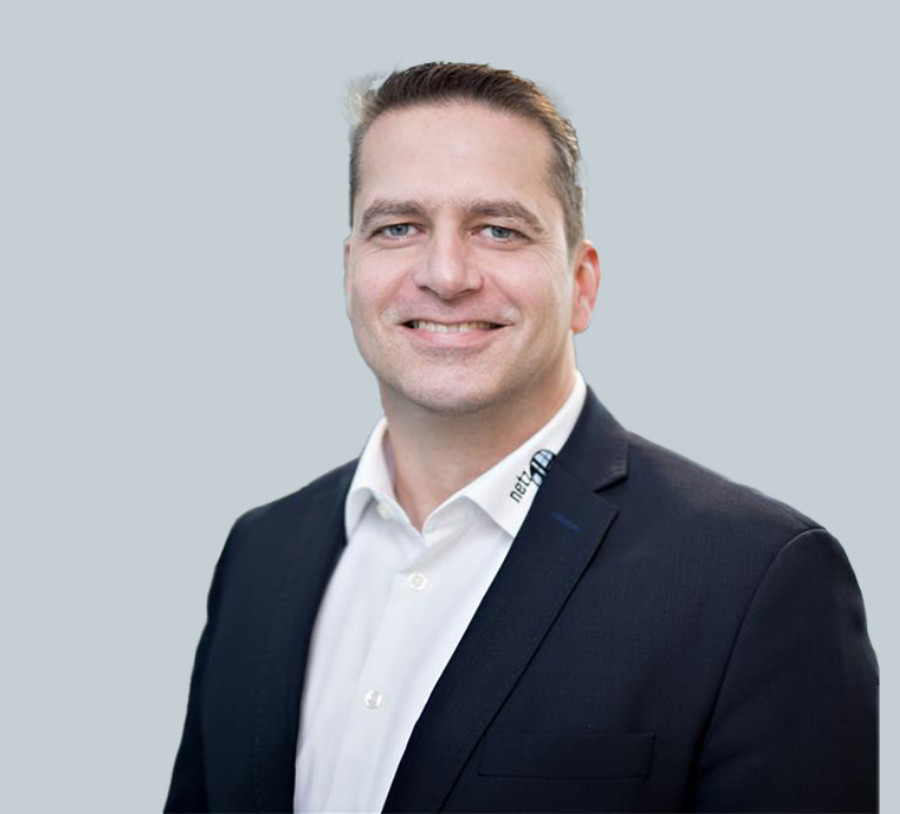
Ralf has been working as a service manager for 16 years. He supports contract customers and oversees outsourcing projects. In an interview, he explains what companies should consider when scaling outsourced IT services from the perspective of both the service provider and the client.
Outsourcing at Scale refers to the scalable outsourcing of standardized services. These can be provided for multiple areas or locations and expanded as needed without increasing the administrative workload in the same proportion.
Above all, standardisable services such as user helpdesk, workplace services, as well as cloud, network and infrastructure services. For business-critical applications and processes, companies should particularly carefully consider what they outsource.
Yes. The service provider can take on operational tasks. The primary responsibility for strategy, governance, and the management of the service remains with the client. Therefore, a service owner on the client side is important.
Clear-defined roles and interfaces, for example using a RACI matrix. Agreed SLAs, regular reporting and service reviews also help to verify the performance of the participating service providers.
Key risks include dependence on a service provider and the loss of internal expertise. Both of these can make later transfer to another provider or the withdrawal of a service more difficult, especially if documentation is missing.
It’s not just about meeting SLAs; system availability, the degree of automation, the continued development of the service, and user satisfaction all show whether the model delivers the desired results.
